
Summary
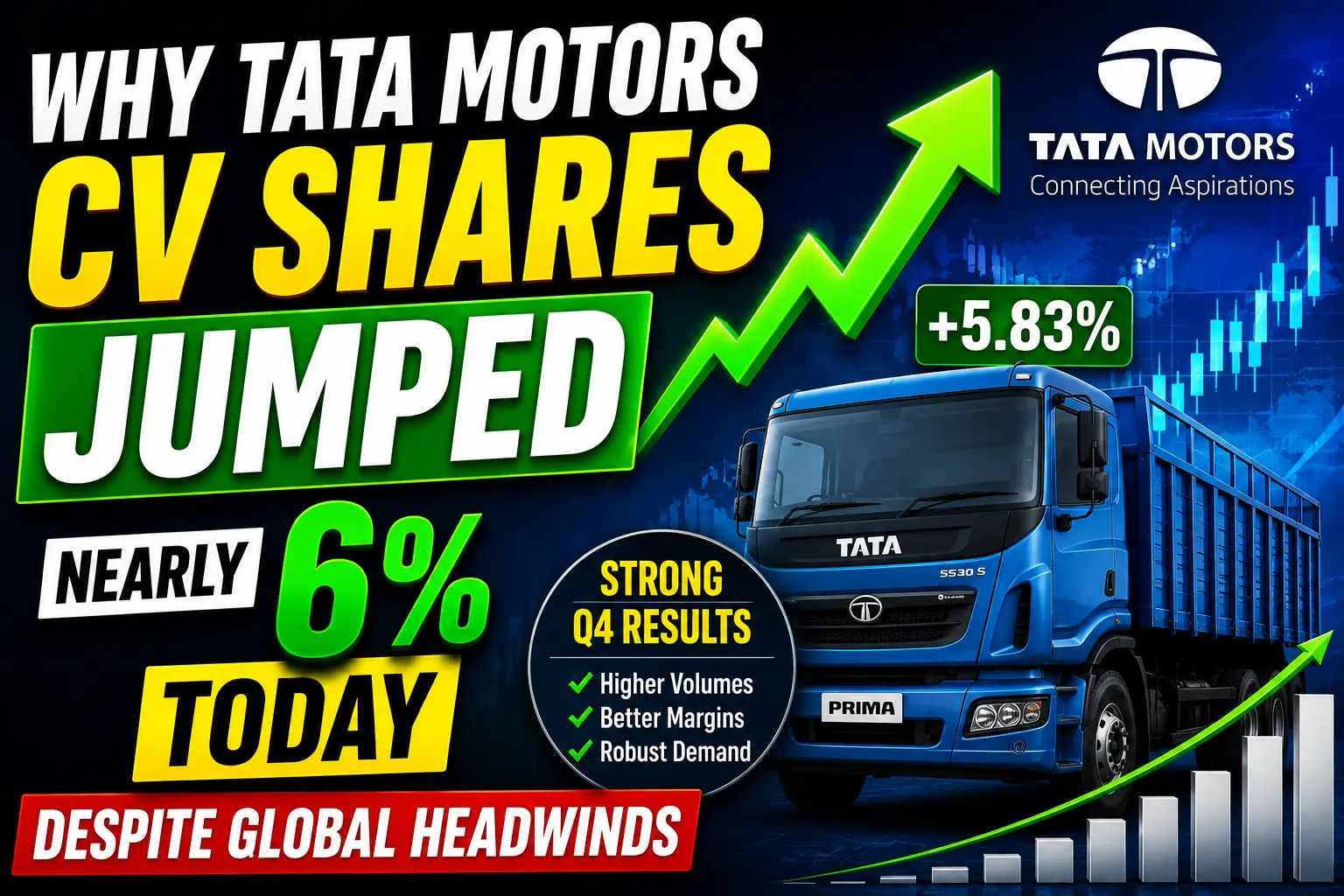
Tata Motors Commercial Vehicles (TMCV) shares gained nearly 6% after CEO Girish Wagh expressed confidence in the long-term outlook for India’s commercial vehicle industry. While he acknowledged that rising diesel prices, higher commodity costs and the ongoing West Asia conflict may weigh on demand in the short term, he believes India’s economic growth and infrastructure expansion will continue to drive the sector over the coming years.
News Hook
Despite global geopolitical tensions, investors rushed to buy Tata Motors Commercial Vehicles on Thursday after the company’s management struck an optimistic tone about future growth. The stock climbed close to 6% as the CEO reassured markets that current challenges are temporary, while India’s structural growth drivers remain firmly in place.
Why This Stock Is in Focus Today
Tata Motors Commercial Vehicles shares surged as much as 5.7% intraday before closing nearly 5% higher, following comments from CEO Girish Wagh highlighting the company’s positive long-term outlook.
According to the management, the recent spike in fuel prices and raw material costs, triggered by the West Asia conflict, may affect commercial vehicle demand in the near term. However, these challenges are expected to be temporary rather than structural.
CEO Explains Why the Industry Still Looks Strong
Girish Wagh said higher diesel prices and commodity inflation are creating short-term pressure on fleet operators, which could result in moderate demand growth during the current financial year.
However, he emphasized that India’s long-term economic fundamentals remain strong.
The company expects sustained GDP growth, rising manufacturing activity, expanding infrastructure projects and higher freight movement to support commercial vehicle demand over the coming years.
According to the management, as long as India’s economy continues growing in the 6%–8% range, road freight demand is likely to remain healthy, creating long-term opportunities for the commercial vehicle sector.
Middle East Crisis Hit Business, But Recovery Has Started
The conflict in West Asia temporarily disrupted Tata Motors’ international commercial vehicle business, particularly in the Middle East, which traditionally contributes around 20% of its overseas monthly volumes.
Vehicle shipments had slowed significantly during the disruption. However, the company said exports to the region have now started resuming as logistics conditions improve.
The reopening of key shipping routes has also reduced supply chain concerns that had earlier pushed up transportation costs and delayed deliveries.
Commodity Inflation Remains a Challenge
Apart from logistics disruptions, Tata Motors also faced higher input costs due to rising prices of commodities such as aluminium and other industrial materials.
Although production has largely remained stable, inflationary pressure on raw materials continues to impact profitability.
To offset a part of these rising costs, the company has already announced a price increase of up to 2.5% across its commercial vehicle portfolio, effective July 1, 2026.
Company Strengthens Supply Chain Strategy
Learning from recent geopolitical disruptions, Tata Motors has initiated a supply chain diversification strategy.
The company plans to reduce dependence on a single international trade route by creating alternative sourcing and export channels, making its global operations more resilient against future disruptions.
Electric Commercial Vehicle Business Gains Momentum
Another positive trigger for investors is the company’s rapidly expanding electric commercial vehicle business.
Recently, Tata Motors announced fresh orders for more than 3,400 electric commercial vehicles, covering trucks, buses and small commercial vehicles across logistics, e-commerce, passenger transport, FMCG distribution, mining and infrastructure sectors.
The large order book reflects increasing acceptance of electric mobility solutions among commercial fleet operators and strengthens Tata Motors’ leadership in the fast-growing eCV market.
What Investors Should Watch
Investors will now focus on:
- Impact of the July price hike on margins
- Recovery in Middle East exports
- Commodity price trends
- Growth in domestic commercial vehicle demand
- Execution of electric commercial vehicle orders
- Upcoming quarterly earnings
While short-term volatility due to global events cannot be ruled out, the management believes India’s infrastructure-led growth cycle and rising freight demand could continue supporting the commercial vehicle business over the long run.
Disclaimer: This article is intended solely for informational purposes and should not be treated as investment advice. Investors should evaluate their financial objectives and consult a qualified financial advisor before making investment decisions.

Nitish Kumar Sharma is the Founder, Chief Executive Officer (CEO), and Editor-in-Chief of Learn Onex. He leads the platform’s vision, editorial strategy, content standards, and long-term growth initiatives with a focus on financial education and investor awareness.