
Summary
India’s electric vehicle (EV) industry is moving beyond the early adoption phase and entering a period of large-scale expansion. Government incentives, rising consumer awareness, rapid improvements in battery technology, and increasing investments by automobile manufacturers have accelerated the country’s transition towards electric mobility. While passenger electric cars continue to receive significant attention, the broader EV ecosystem—including batteries, auto components, electronics, and electric buses—is emerging as an equally important growth story.
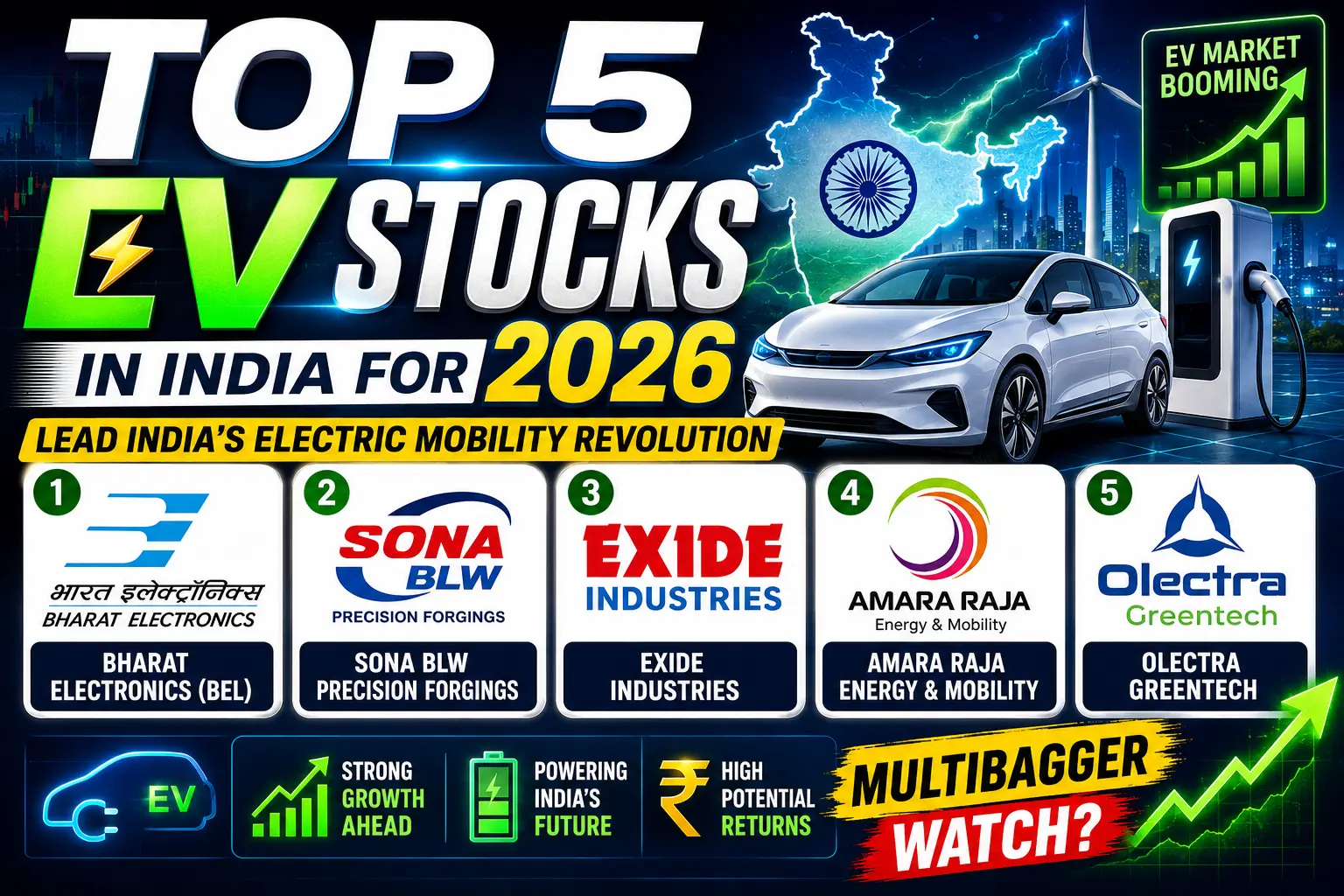
This shift has brought several listed companies into focus. Businesses that manufacture precision components, battery systems, advanced electronics, and electric buses are expected to play a vital role in India’s EV supply chain over the coming years. Among them, Bharat Electronics Ltd (BEL), Sona BLW Precision Forgings, Exide Industries, Amara Raja Energy & Mobility, and Olectra Greentech have established themselves as key participants across different segments of the industry.
Each company operates in a distinct area of the EV ecosystem. BEL contributes through advanced electronics and energy solutions, Sona BLW supplies precision components for global electric vehicles, Exide Industries is expanding its battery business beyond conventional technologies, Amara Raja Energy & Mobility is building capabilities in advanced energy storage, while Olectra Greentech has become one of India’s leading electric bus manufacturers.
As the industry continues to evolve, these companies remain among the most closely watched names in India’s electric mobility theme.
Quick Target Box
| Particular | Details |
|---|---|
| Sector | Electric Vehicle (EV) Ecosystem |
| Theme | Electric Mobility & Clean Transportation |
| Companies Covered | Bharat Electronics, Sona BLW Precision Forgings, Exide Industries, Amara Raja Energy & Mobility, Olectra Greentech |
| Coverage | Business Overview, Financial Snapshot, Growth Drivers, Industry Position |
| Investment Horizon | Long-Term Sector Analysis |
India’s EV Industry in 2026
India has become one of the fastest-growing electric mobility markets globally. Rising fuel prices, increasing environmental awareness, government policy support, and improvements in charging infrastructure have encouraged both consumers and businesses to adopt electric vehicles.
The industry is no longer limited to passenger vehicles. Electric two-wheelers, three-wheelers, commercial vehicles, logistics fleets, and public transport buses are witnessing growing adoption across different states. This broad-based demand has created opportunities for companies supplying batteries, motors, electronics, drivetrains, charging solutions, and specialised automotive components.
Government initiatives aimed at strengthening domestic manufacturing have also encouraged companies to invest in localisation of EV technologies. Battery manufacturing, cell development, advanced electronics, and component production are gradually becoming strategic priorities for Indian manufacturers.
As a result, investors are increasingly focusing on businesses that form the backbone of the EV ecosystem rather than only vehicle manufacturers.
Why EV Stocks Are in Focus
Electric mobility has evolved into one of the largest long-term themes within India’s automobile and manufacturing sectors.
Automobile manufacturers are expanding their EV product portfolios, battery makers are investing in next-generation technologies, and component suppliers are developing specialised products designed specifically for electric vehicles. At the same time, governments across the country continue to encourage cleaner transportation through policy support and infrastructure development.
Another important trend is the localisation of manufacturing. Indian companies are increasingly producing components that were previously imported, helping strengthen the domestic supply chain while reducing dependence on overseas suppliers.
The EV ecosystem today includes battery manufacturers, precision engineering companies, electronics producers, charging infrastructure providers, software developers, and public transport solution providers. This diversification has widened the investment universe within the sector.
Bharat Electronics Ltd (BEL)
About the Company
Bharat Electronics Ltd is one of India’s leading technology-driven engineering companies with decades of experience in designing and manufacturing advanced electronic systems. Although the company is primarily recognised for its defence business, it has steadily expanded into civilian applications, including smart mobility, energy storage, intelligent transportation systems, communication technologies, and advanced power electronics.
Its expertise in electronic engineering enables the company to participate in several emerging technologies supporting electric mobility.
Why BEL Is Connected to the EV Theme
Modern electric vehicles depend heavily on sophisticated electronic systems. Battery management units, power conversion systems, communication modules, charging technologies, intelligent transport infrastructure, and energy management solutions have become essential components of the EV ecosystem.
BEL’s capabilities in electronics manufacturing and system integration position the company to contribute to these areas as demand for advanced mobility technologies continues to increase.
Business Strengths
BEL has built a strong reputation through continuous investment in research and development. Its diversified product portfolio reduces dependence on a single business segment while allowing the company to benefit from multiple technology trends.
The company also maintains healthy operational efficiency, consistent profitability, and a strong balance sheet supported by steady cash generation. Its engineering expertise and manufacturing capabilities remain among its biggest competitive advantages.
Financial Snapshot
BEL is one of the largest listed electronics companies in India by market capitalisation. The company has maintained a history of revenue growth, healthy operating margins, and regular dividend payments. Strong order inflows and execution capabilities continue to support business visibility over the long term.
Outlook
With increasing emphasis on localisation of electronics manufacturing and expansion of intelligent mobility infrastructure, BEL remains an important technology player within India’s broader EV ecosystem.
Sona BLW Precision Forgings
About the Company
Sona BLW Precision Forgings has established itself as one of India’s leading suppliers of high-precision automotive components with a significant focus on electric vehicles. Unlike many traditional auto component manufacturers, the company derives a meaningful share of its revenue from products specifically designed for EV platforms.
Its customer base includes several global automobile manufacturers, making it an important participant in the international EV supply chain.
Business Model
The company manufactures differential gears, traction motors, precision forged components, motor control systems, and advanced driveline technologies used in electric passenger vehicles and hybrid automobiles.
Its emphasis on lightweight engineering and high-efficiency products aligns well with the evolving needs of electric mobility.
Why Investors Track Sona BLW
As global automakers accelerate the transition towards electric vehicles, demand for precision drivetrain technologies continues to grow. Sona BLW has steadily expanded its EV-focused product portfolio while increasing exports to international customers.
Its business model benefits from long-term contracts, technological expertise, and diversified geographic exposure, reducing dependence on any single market.
Financial Snapshot
The company has reported steady growth supported by rising demand from domestic and overseas customers. Export revenue continues to contribute significantly to overall sales, while investments in research and product development strengthen its competitive position.
Growth Drivers
Future growth could be supported by increasing global EV production, higher localisation of advanced components, new customer programmes, and expansion into additional international markets.
Exide Industries
About the Company
Exide Industries is one of India’s oldest and largest battery manufacturers. While its traditional business has been centred around lead-acid batteries, the company is actively expanding into lithium-ion technology, advanced battery manufacturing, and energy storage solutions to align with the changing automotive landscape.
The company serves automotive, industrial, telecom, power backup, and infrastructure segments, giving it a diversified business profile.
Why Exide Is Important for the EV Ecosystem
Batteries remain the most critical component of any electric vehicle. Recognising this shift, Exide has increased its focus on advanced battery technologies and manufacturing capabilities designed to support future EV demand.
The company is investing in strengthening its position within India’s emerging battery value chain while continuing to leverage its established distribution network and technical expertise.
Business Strengths
Exide benefits from decades of brand recognition, nationwide distribution, extensive manufacturing infrastructure, and strong relationships with automobile manufacturers. These advantages provide a solid foundation as the company expands into next-generation battery technologies.
Its diversified revenue base also helps reduce dependence on a single industry segment while supporting long-term operational stability.
Amara Raja Energy & Mobility
About the Company
Amara Raja Energy & Mobility has transformed itself from being one of India’s leading conventional battery manufacturers into a company focused on next-generation energy storage solutions. The company is actively investing in lithium-ion battery technology, battery packs, advanced chemistry cells, and energy storage systems to strengthen its presence in India’s fast-growing electric mobility market.
With decades of experience in battery manufacturing and a well-established distribution network, Amara Raja is positioning itself to serve both the automotive and industrial energy storage segments. The company has also announced investments in advanced manufacturing facilities and research capabilities to support future demand for EV batteries.
Why Amara Raja Is in Focus
As battery technology becomes the foundation of the EV industry, companies capable of manufacturing reliable and efficient battery systems are attracting increased market attention. Amara Raja’s strategy extends beyond traditional lead-acid batteries and focuses on creating a diversified energy business.
Its investments in lithium-ion technology, battery recycling, and energy storage solutions reflect the company’s intention to become an important participant in India’s clean energy ecosystem.
Business Strengths
One of Amara Raja’s biggest strengths is its strong manufacturing experience developed over several decades. The company has built trusted relationships with automobile manufacturers while maintaining a broad nationwide distribution network.
Its expansion into advanced battery technology is supported by continuous investments in research and development. At the same time, the company continues to generate stable cash flows from its conventional battery business, providing financial support for future growth initiatives.
Financial Snapshot
Amara Raja continues to maintain a healthy balance sheet supported by diversified revenue streams across automotive and industrial batteries. The company remains focused on improving operational efficiency while expanding investments in future technologies.
The transition towards advanced battery manufacturing is expected to remain one of its most significant long-term business priorities.
Growth Drivers
Several factors could support the company’s future growth:
- Expansion of lithium-ion battery manufacturing
- Increasing adoption of electric passenger vehicles
- Rising demand for battery energy storage systems
- Development of battery recycling infrastructure
- Growing localisation of advanced cell technologies
Challenges
Despite strong opportunities, the battery industry remains highly competitive. Raw material price volatility, technological advancements, changing battery chemistries, and increasing competition from global manufacturers remain key challenges for the sector.
Olectra Greentech
About the Company
Olectra Greentech has emerged as one of India’s leading electric bus manufacturers and plays a significant role in the country’s transition towards sustainable public transportation. The company supplies electric buses to various state transport undertakings and government agencies while continuously expanding its manufacturing capabilities.
Unlike companies focused on passenger electric cars, Olectra operates primarily in the commercial electric mobility segment, where demand is gradually increasing as cities adopt cleaner transportation systems.
Why Olectra Is in Focus
Public transport electrification remains an important priority across several Indian states. Government initiatives encouraging electric buses have resulted in increasing order opportunities for manufacturers with established production capabilities.
Olectra has strengthened its position through continuous product development, manufacturing expansion, and participation in large public transportation projects.
Business Strengths
The company benefits from its early presence in India’s electric bus segment. Years of operational experience have enabled it to develop expertise in manufacturing, vehicle integration, and after-sales support.
Its focus on commercial mobility differentiates it from companies operating primarily in passenger EVs. As cities continue modernising public transport fleets, electric buses are expected to remain an important area of growth.
Financial Snapshot
Olectra has recorded significant business expansion over recent years, supported by increasing order inflows and higher production capacity. Revenue growth continues to depend largely on project execution, order deliveries, and government procurement schedules.
The company’s long-term performance will be influenced by its ability to execute existing orders efficiently while securing new contracts.
Growth Drivers
Key growth drivers include:
- Rising adoption of electric buses
- Government support for public transport electrification
- Expansion of manufacturing capacity
- Increasing urban mobility projects
- Growing awareness of sustainable transportation
Challenges
Execution timelines, project-based revenue recognition, policy changes, and competitive bidding remain important factors influencing business performance.
Comparative Analysis of Top EV Stocks
| Company | Primary EV Exposure | Key Business Area |
|---|---|---|
| Bharat Electronics Ltd | Electronics & Smart Mobility | Power electronics, intelligent transport systems |
| Sona BLW Precision Forgings | EV Components | Precision gears, traction motors, drivetrain solutions |
| Exide Industries | Battery Manufacturing | Lead-acid and lithium-ion batteries |
| Amara Raja Energy & Mobility | Energy Storage | Advanced batteries and energy storage solutions |
| Olectra Greentech | Electric Mobility | Electric buses and commercial transportation |
Financial Snapshot
| Company | Business Segment | Market Position |
|---|---|---|
| Bharat Electronics | Electronics | Large-cap technology company |
| Sona BLW | Auto Components | Global EV supplier |
| Exide Industries | Batteries | Established battery manufacturer |
| Amara Raja Energy & Mobility | Energy Storage | Diversified battery company |
| Olectra Greentech | Electric Buses | Leading electric bus manufacturer |
Growth Drivers for India’s EV Industry
India’s EV industry continues to benefit from several structural factors that are expected to support long-term growth across the value chain.
Improving charging infrastructure, increasing localisation of manufacturing, advances in battery technology, rising investments by automobile manufacturers, and expanding public transport electrification are creating opportunities for companies operating across different segments of the ecosystem.
The battery segment remains one of the most closely watched areas as manufacturers invest in advanced cell technologies and energy storage solutions. Similarly, precision engineering companies supplying motors, drivetrains, and electronic systems are expected to benefit as production volumes increase.
Commercial electric vehicles, particularly buses, also represent a growing market as state governments continue to modernise transportation infrastructure.
Risks Facing the EV Sector
Despite its long-term potential, the industry also faces several challenges.
Battery raw material prices remain volatile, technological developments continue to evolve rapidly, and competition is increasing across multiple segments. Companies must also manage execution risks, capital expenditure requirements, changing regulations, and customer demand fluctuations.
For businesses supplying global automobile manufacturers, international economic conditions and production cycles may also influence financial performance.
Frequently Asked Questions (FAQs)
Which sectors benefit from India’s EV growth?
Apart from vehicle manufacturers, battery companies, electronics manufacturers, precision engineering firms, charging infrastructure providers, and auto component suppliers are expected to benefit from the industry’s expansion.
Why are battery companies important for the EV industry?
Batteries represent one of the most important components of electric vehicles. Improvements in battery efficiency, charging speed, safety, and manufacturing capacity play a significant role in the overall growth of electric mobility.
What makes auto component companies important?
Electric vehicles require specialised components such as traction motors, precision gears, battery management systems, power electronics, and lightweight engineering solutions. Companies manufacturing these products form a critical part of the EV supply chain.
Is the EV ecosystem limited to passenger cars?
No. The EV ecosystem includes electric buses, commercial vehicles, two-wheelers, three-wheelers, batteries, electronics, charging infrastructure, software, and advanced manufacturing technologies.
Final Words
India’s electric vehicle industry is expanding across multiple segments, creating opportunities far beyond automobile manufacturing. Companies involved in advanced electronics, battery technologies, precision engineering, and electric public transportation are becoming increasingly important as the country’s mobility landscape evolves.
Bharat Electronics Ltd, Sona BLW Precision Forgings, Exide Industries, Amara Raja Energy & Mobility, and Olectra Greentech each represent different pillars of the EV ecosystem. Their businesses highlight how India’s transition towards cleaner transportation depends on an integrated supply chain rather than a single category of companies.
As investments continue across manufacturing, infrastructure, and technology, these companies are expected to remain among the most closely tracked names associated with India’s electric mobility story.
Read Also : Avenue Supermarts Shares Fall 5% After Q1 Business Update Despite 15% Revenue Growth
Disclaimer: This article is for informational purposes only and should not be considered investment advice. Investors should conduct their own research or consult a qualified financial advisor before making investment decisions.

Nitish Kumar Sharma is the Founder, Chief Executive Officer (CEO), and Editor-in-Chief of Learn Onex. He leads the platform’s vision, editorial strategy, content standards, and long-term growth initiatives with a focus on financial education and investor awareness.