
Summary
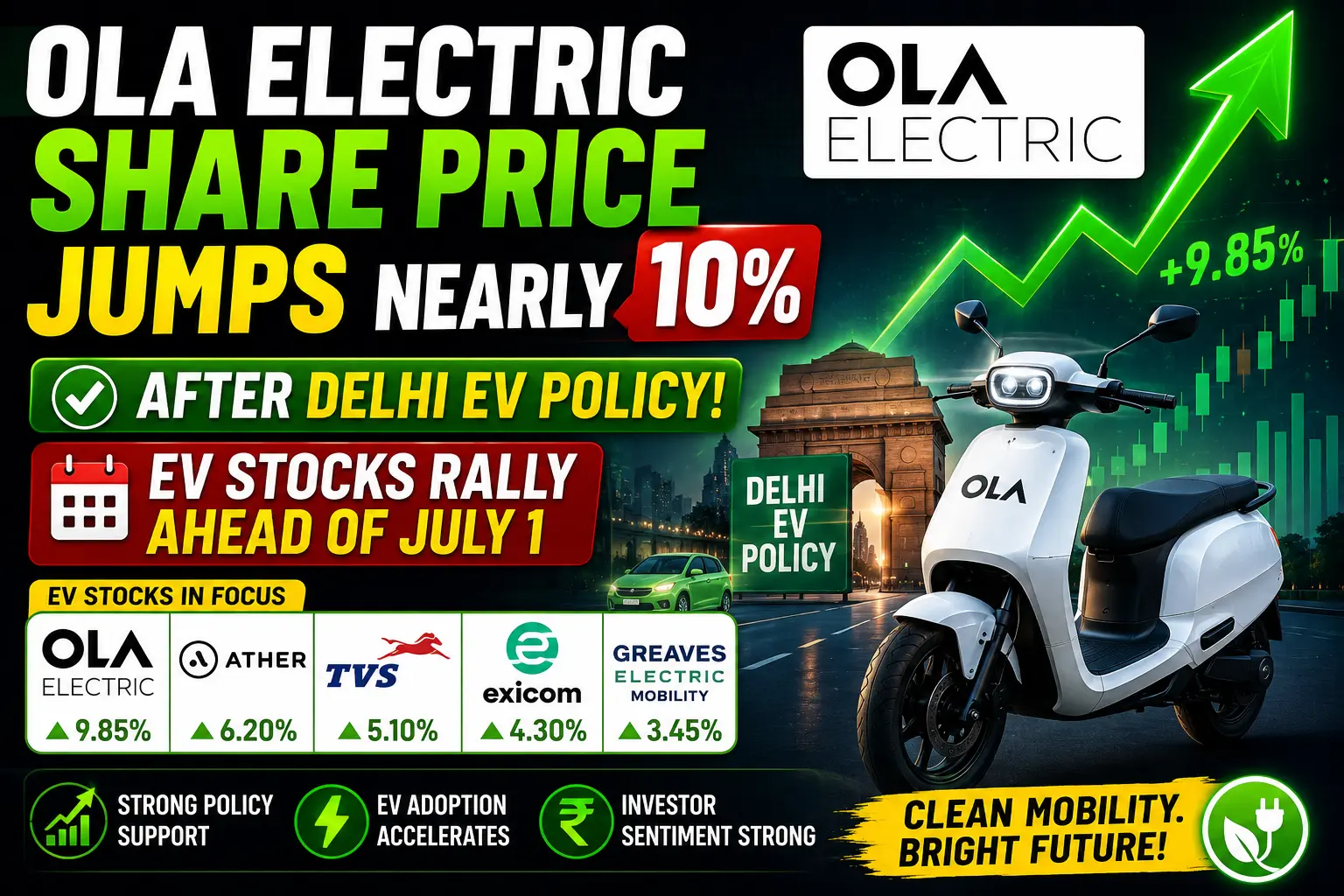
Electric vehicle stocks witnessed strong buying interest on June 30 after the Delhi government approved a new Electric Vehicle (EV) Policy designed to accelerate clean mobility adoption in the capital. Ola Electric Mobility emerged as one of the biggest gainers, climbing nearly 10% during intraday trading, while Ather Energy and JBM Auto also traded higher. Investors reacted positively to policy incentives aimed at making EV ownership more affordable and expanding electric mobility across Delhi.
The electric vehicle sector returned to the spotlight after Delhi unveiled its latest EV policy ahead of its July 1 implementation. The announcement triggered renewed optimism among investors, who expect the incentives and long-term transition roadmap to support demand for electric two-wheelers and passenger vehicles.
Why EV Stocks Are in Focus Today
Shares of several EV-related companies gained momentum after the Delhi Cabinet approved a revised policy that offers financial incentives for buyers and introduces a phased transition toward electric mobility.
The policy is expected to strengthen one of India’s largest EV markets by reducing ownership costs and encouraging consumers to shift away from conventional fuel-powered vehicles.
Market participants viewed the announcement as a positive demand catalyst for companies operating in the electric mobility ecosystem.
Ola Electric Leads the Rally
Ola Electric Mobility was among the strongest performers in Tuesday’s trading session.
The stock opened with modest gains before attracting sustained buying interest throughout the day. During intraday trade, shares climbed nearly 10%, touching a session high of around ₹44.95, as investors responded positively to the policy announcement.
The sharp move reflected expectations that stronger policy support could benefit electric two-wheeler manufacturers over the medium term.
Other EV Stocks Also Witness Buying Interest
The positive sentiment extended beyond Ola Electric.
Shares of Ather Energy and JBM Auto also traded in positive territory as investors assessed the potential impact of the new policy on future EV adoption.
Meanwhile, Tata Motors’ passenger vehicle business showed comparatively muted movement, indicating that investors remained selective while evaluating the policy’s likely beneficiaries.
Overall, the sector witnessed broad-based buying as expectations of higher EV penetration improved.
Key Highlights of Delhi’s New EV Policy
The newly approved policy introduces several measures intended to make electric vehicles more attractive for consumers.
Some of the major proposals include:
- Full exemption from road tax and registration charges for eligible electric cars priced up to ₹30 lakh (ex-showroom) and registered in Delhi.
- Financial support for electric two-wheeler buyers through phased subsidies over the next three years.
- A long-term roadmap to gradually replace fossil fuel-powered vehicles with cleaner electric alternatives.
These measures are aimed at lowering the upfront cost of EV ownership while encouraging faster adoption across different vehicle categories.
Electric Two-Wheeler Buyers to Receive Subsidies
The policy proposes direct incentives for electric scooter and motorcycle buyers over a three-year period.
Under the announced structure:
- Buyers will receive ₹30,000 during the first year.
- The subsidy will reduce to ₹20,000 in the second year.
- The final year will offer support of ₹10,000.
The staggered incentive model is expected to encourage early adoption while gradually reducing government support as the market matures.
Delhi Sets Long-Term Roadmap for EV Transition
Apart from financial incentives, the policy outlines a phased transition toward electric mobility.
According to the proposed timeline:
- From January 1, 2027, only electric autorickshaws will be eligible for new registrations.
- The registration of new petrol and CNG-powered two-wheelers will gradually be discontinued.
- Beginning April 1, 2028, only electric motorcycles and scooters will be allowed for fresh registration in Delhi.
The policy is scheduled to come into effect from July 1, marking the next phase of the capital’s clean transportation strategy.
Why Investors Are Watching the EV Sector
Government incentives remain one of the biggest growth drivers for India’s electric vehicle industry.
Policies that reduce purchase costs, improve charging infrastructure and encourage cleaner transportation often influence demand expectations, making them closely watched by equity investors.
The latest Delhi policy has reinforced optimism that supportive government initiatives could accelerate EV adoption in one of the country’s largest automobile markets.
What Investors Should Watch Next
Following the policy rollout, market participants will monitor several important developments:
- Consumer response to the new incentives.
- Monthly EV sales trends across major manufacturers.
- Expansion of charging infrastructure.
- Future policy announcements from other states.
- Company guidance during upcoming quarterly earnings.
These factors could shape investor sentiment toward EV manufacturers over the coming months.
End
Delhi’s latest Electric Vehicle Policy has provided fresh momentum to the EV sector, with Ola Electric leading Tuesday’s rally after investors welcomed measures aimed at making electric mobility more affordable. As the policy comes into force from July 1, attention will shift toward whether the announced incentives translate into stronger vehicle demand and sustained growth for EV manufacturers operating in India.
Read Also : OYO Parent Prism Files Updated DRHP for ₹6,650 Crore IPO; Fresh Share Issue Planned, No OFS
Disclaimer: This article is for informational purposes only and should not be considered investment advice. Stock market investments are subject to market risks. Investors should conduct their own research before making any investment decisions.

Nitish Kumar Sharma is the Founder, Chief Executive Officer (CEO), and Editor-in-Chief of Learn Onex. He leads the platform’s vision, editorial strategy, content standards, and long-term growth initiatives with a focus on financial education and investor awareness.