
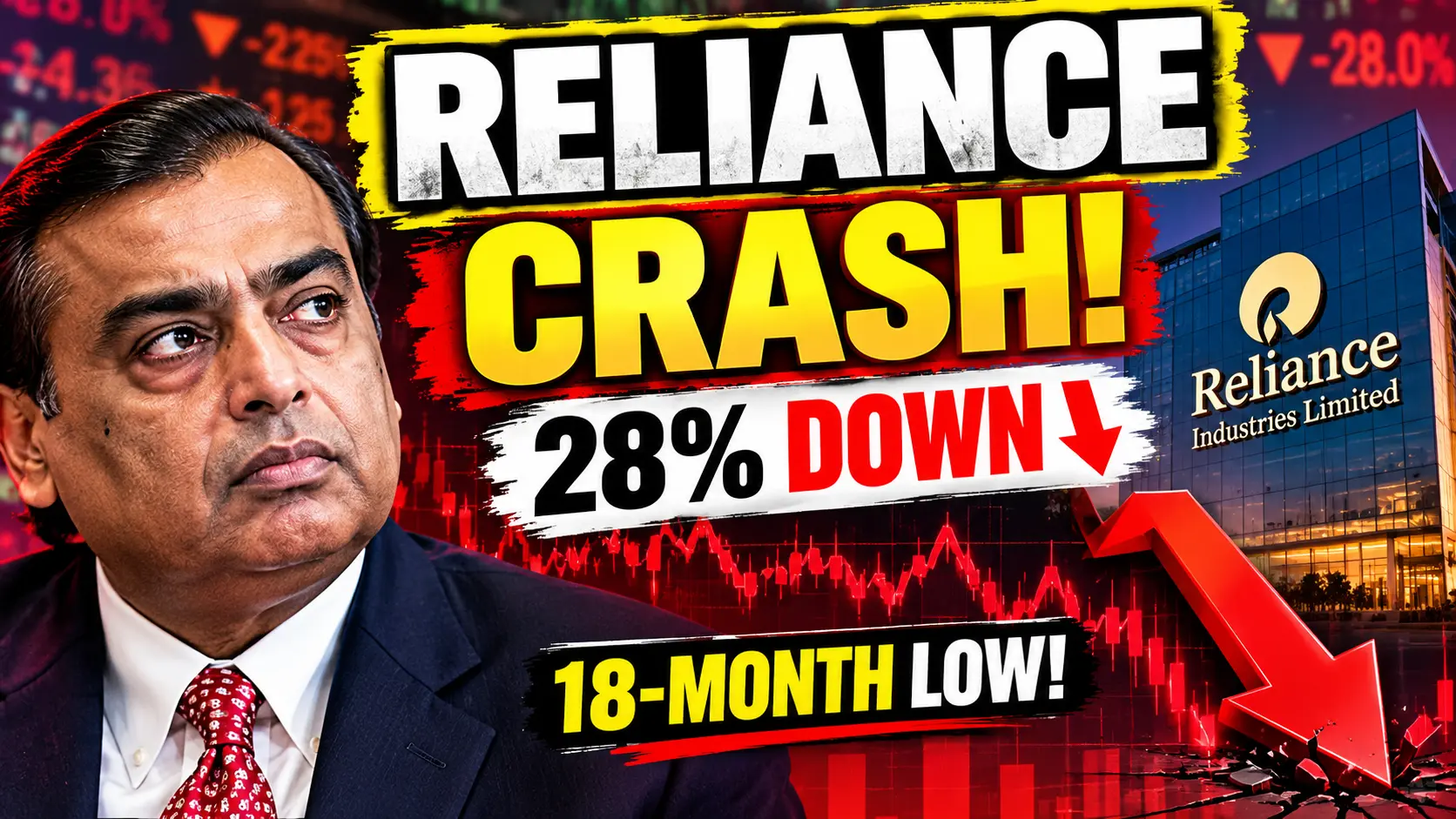
Reliance Industries is facing a difficult phase in the stock market. Shares of the Mukesh Ambani-led conglomerate came under fresh selling pressure on October 12, 2026, touching an intraday low of ₹1,157 on the BSE. The stock has now fallen around 28% from its January high, raising questions about what is weighing on investor sentiment and whether the company can recover in the coming months.
The decline has also been sharper than the broader market downturn. Reliance shares have lost approximately 26% since the beginning of 2026, while the BSE Sensex has fallen around 15.5% over the same period. The stock also recorded its fourth consecutive session of losses, slipping about 5% over those four trading days. Source: Business Standard
Why Are Reliance Industries Shares Falling?
The weakness in Reliance shares cannot be explained by a single factor. The company’s energy business is exposed to fluctuations in crude oil prices, refining margins, feedstock costs and international trade conditions. Changes in these areas can affect profitability even when reported revenue continues to grow.
Higher crude prices helped Reliance increase its revenue during the April–June quarter of FY27. However, revenue growth does not automatically translate into stronger profits. Planned maintenance, higher crude procurement costs and expenses associated with domestic fuel operations limited operating profitability.
Investors are also watching developments in the Middle East. Disruptions to energy supplies and petrochemical production have affected global trade flows, creating both opportunities and risks for large refiners such as Reliance.
Rising Revenue Has Not Removed Profit Concerns
Reliance’s latest quarterly performance highlights an important difference between sales growth and earnings growth.
The company reported a 25.4% year-on-year increase in revenue from operations to approximately ₹3.12 lakh crore in the April–June 2026 quarter. However, net profit attributable to shareholders declined 22.3% to ₹20,946 crore.
A significant reason for the fall in net profit was lower other income compared with the previous year. This shows why investors look beyond revenue figures when assessing a company’s financial health. Source: Business Standard quarterly results report
For the market, the key question is whether Reliance can improve earnings across its major businesses while managing costs and dealing with uncertain global conditions.
Global Oil Markets Could Influence the Next Move
Reliance operates one of the world’s largest refining complexes at Jamnagar, Gujarat. Its scale and ability to process different grades of crude oil can provide a competitive advantage, particularly when the prices of certain crude varieties become more attractive.
According to analysts cited in recent market coverage, the return of Venezuelan crude supplies and narrowing discounts on Russian oil could create opportunities for Reliance to improve its refining margins. However, the benefits will depend on actual supply availability, crude purchase prices and conditions in refined-product markets. Source: Economic Times
At the same time, higher crude prices are not always positive for refiners. If input costs rise faster than the prices of products such as diesel, petrol and aviation fuel, profit margins can come under pressure.
This makes the direction of refining margins, rather than crude prices alone, an important factor to watch.
Brokerages Still See Potential Upside
Despite the recent correction, some brokerages continue to maintain positive views on Reliance Industries.
Jefferies has retained its Buy rating with a target price of ₹1,710 per share. YES Securities has also maintained a Buy recommendation, with a target price of ₹1,660.
These assessments reflect expectations that refining margins, petrochemical performance and Reliance’s operational advantages could support earnings in the future. However, these targets represent analysts’ estimates, not guaranteed future prices.
Investors should also remember that a stock can remain under pressure even after a substantial fall if earnings expectations weaken or market conditions deteriorate further.
What Should Investors Watch Next?
Reliance’s recovery will depend on more than a rebound in its share price. Several developments could influence its performance over the coming quarters:
- Refining margins: Better margins could support earnings from the company’s oil-to-chemicals business.
- Petrochemical demand: Stronger demand and improved product spreads could help offset pressure in other areas.
- Operating costs: Lower feedstock and energy costs could improve profitability.
- Quarterly earnings: Investors will look for evidence that earnings are improving, rather than relying solely on revenue growth.
- Global developments: Oil supply disruptions, trade restrictions and currency movements could affect both costs and product prices.
The company’s performance across its digital services, retail and energy businesses will also matter when investors assess its overall growth outlook.
Conclusion
Reliance Industries’ fall to an 18-month low has put the stock under renewed scrutiny. The decline reflects a combination of market weakness, pressure on earnings expectations and uncertainty surrounding the global energy and petrochemical industries.
However, the company’s scale, diversified operations and refining capabilities remain important strengths. Whether these advantages lead to a sustained recovery will depend on future earnings, margins and the wider market environment.
For investors, the key issue is not simply how far the stock has fallen, but whether its business performance can justify a stronger valuation over time.
Read Also : Suzlon to Invest ₹550 Crore in Three AI-Powered Factories by 2027: Jobs, Expansion and Business Impact
Disclaimer: This article is for informational purposes only and does not constitute investment advice. Brokerage ratings and target prices are estimates and may change. Investors should assess their financial goals and risk tolerance before making investment decisions.

Nitish Kumar Sharma is the Founder, Chief Executive Officer (CEO), and Editor-in-Chief of Learn Onex. He leads the platform’s vision, editorial strategy, content standards, and long-term growth initiatives with a focus on financial education and investor awareness.